

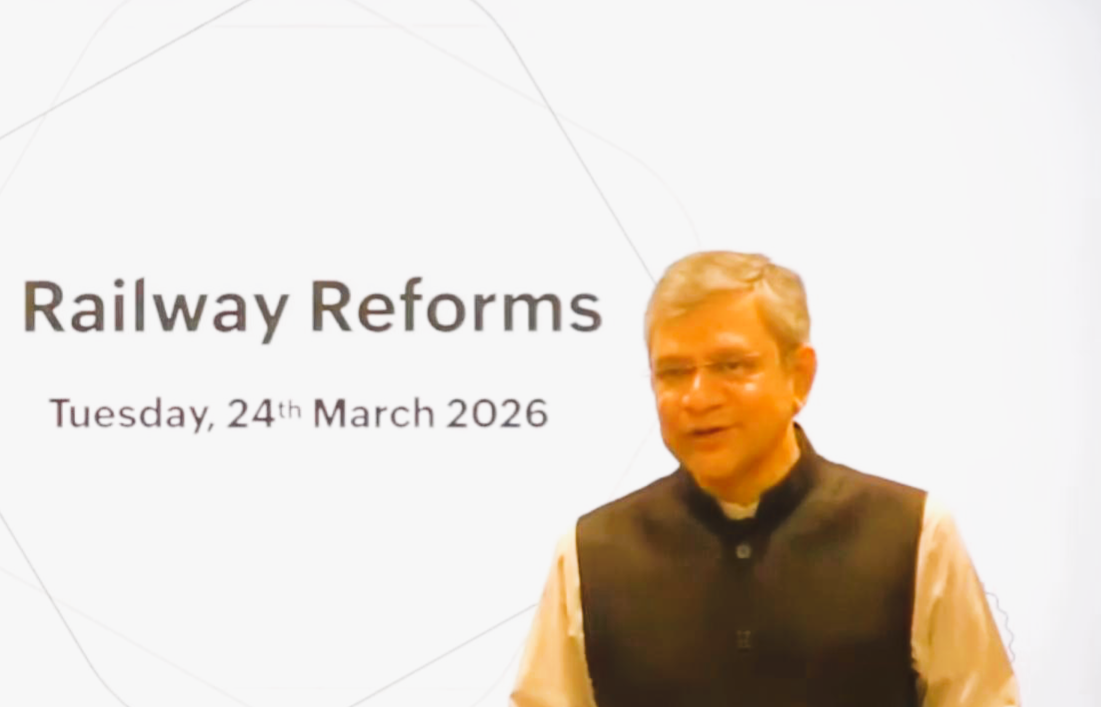

New Delhi, March 24: The Railway Minister Ashwini Vaishnav on Tuesday announced major changes to ticket cancellation and refund rules, announcing a slew of reforms within the Indian Railways as part of the “Reform Express” initiative. He stated that these reforms aim to curb last-minute, speculative bookings, ensure availability of tickets to genuine passengers, and enhance transparency.
Addressing a press conference at Rail Bhavan, Railway Minister Vaishnav stated that the earlier deadlines for ticket cancellations were 48, 12, and 4 hours, but have now been extended to 72, 24, and 8 hours, respectively. This change is in line with improvements in the preparation of advance reservation charts, which are now prepared 9 to 18 hours before train departures. This will allow passengers on the waiting list to plan better and allow for better utilization of vacant seats.
He also announced that the requirement to submit a Ticket Deposit Receipt (TDR) for e-tickets has been eliminated, and refunds will be automatically processed upon cancellation. Furthermore, counter tickets can now be cancelled at any railway station in the country, whereas previously this facility was limited to the originating station.
Further enhancing passenger convenience, the Railways has taken another major decision, allowing passengers to change their boarding station up to 30 minutes before train departure. Previously, this facility was only available until chart preparation. Furthermore, passengers will now be able to upgrade their travel class up to 30 minutes before departure.
Ashwini Vaishnav stated that the Railways has strengthened technical measures to prevent misuse of the ticketing system. Advanced technology has been implemented to prevent ticket booking through bots and fraudulent software. Through the implementation of an Aadhaar-based OTP verification system and data analysis, approximately 30 million fake IRCTC accounts have been removed, significantly improving ticket availability.
The Railway Minister stated that a total of nine reforms have been implemented under the “Reform Express” series of reforms in 2026, including five new reforms. These five reforms include two related to cargo, one to construction, and two to passenger amenities.
In the cargo sector, a major reform has been implemented in salt transportation. India produces approximately 35 million tons of salt annually, of which approximately 9.2 million tons is transported by rail. To increase rail’s share in this sector, special stainless steel containers have been developed, featuring top-loading and side-discharge capabilities. This will eliminate corrosion, reduce cargo losses, and promote multimodal transportation.
The Railways have also provided significant relief to the automobile industry. Automobile companies will now be able to design custom wagons to suit their needs. Currently, approximately 31 million vehicles are produced annually in the country, but the Railways’ share in passenger vehicle transportation is only 24 percent. The new reforms are expected to increase this share.
The Railway Minister also announced seven major changes to improve the quality of construction work. These include tightening contractor eligibility criteria, setting the bid security deposit at two percent of the project cost, and making bid capacity assessment mandatory for projects exceeding ₹10 crore.
Furthermore, stringent punitive provisions have been implemented to prevent corruption and collusion. The subcontracting limit has been reduced from 70 percent to 40 percent, increasing contractor accountability. An additional five percent performance guarantee has been mandated for unrealistically low bids, preventing project delays and disputes.
The Railway Minister stated that all these reforms are aimed at ensuring transparency, quality, and timeliness in railway projects.
He also mentioned previously implemented reforms, including improved on-board services, the expansion of Gati Shakti cargo terminals, the RailTech policy, and the digitization of the Railway Claims Tribunal. He stated that cleanliness in general and unreserved coaches is being implemented on a mission mode, and 86 trains have been identified for this purpose.
Ashwini Vaishnav stated that the Railways’ goal is to increase operational efficiency, improve passenger convenience, and encourage freight traffic. He expressed confidence that these steps under the “Reform Express” will make Indian Railways more modern, transparent, and passenger-centric.