


New Delhi, December 08: Parliament on Monday approved the bill to impose a cess on pan masala manufacturing units to increase expenditure on national security and public health.
The Rajya Sabha approved the Health Security and National Security Cess Bill, 2025 and returned it to the Lok Sabha. This bill was approved by the lower house on Friday.
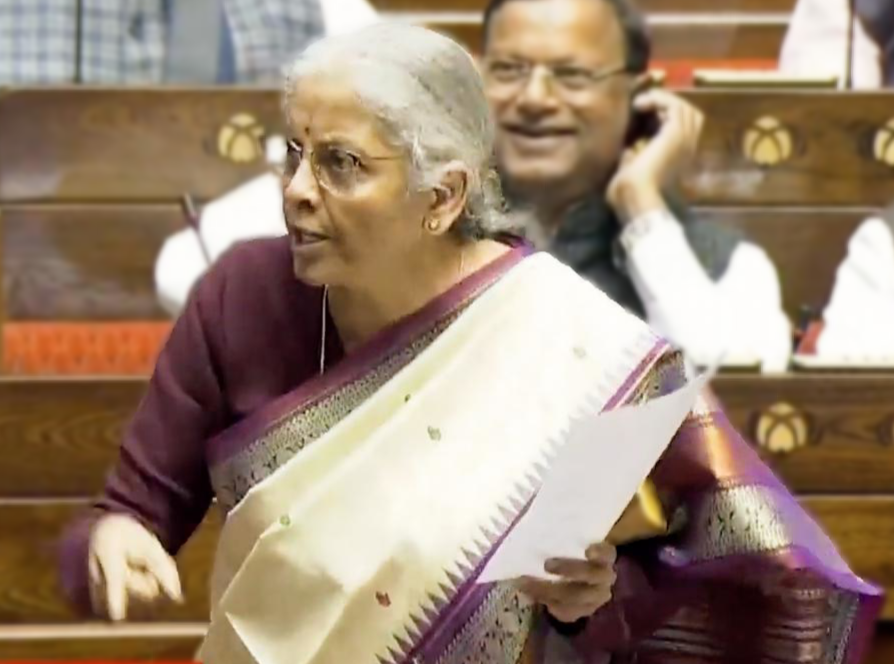
Responding to the discussion on the Health Security and National Security Cess Bill, 2025 in the Rajya Sabha on Monday, Finance Minister Nirmala Sitharaman said that this cess provides a strong mechanism to strengthen the health of citizens and the country’s military preparedness.
She said that this cess will be imposed only on demerit goods, not on any essential goods. The Minister said that in this era, when the security system is rapidly changing, it is very important to raise a dedicated source of revenue for reliable defense capabilities. She noted that modern warfare is dominated by precision weapons, autonomous systems, and space assets.
Nirmala Sitharaman has clearly stated that the cess collected on pan masala will be given to the states. Since the cess has been levied on pan masala, this amount will be used for health-related initiatives.
Finance Minister stated that the government wants to ensure that this product does not become cheaper in the market. Since pan masala is not excisable and can only be subject to a maximum GST of 40 percent, the central government will have to impose an additional cess to bring the price of the product back to its pre-GST price, thus discouraging people from consuming it.
Comparing Ayushman Bharat and West Bengal’s Swasthya Sathi scheme, Finance Minister Nirmala Sitharaman stated that if Bengal had implemented the Ayushman Bharat scheme, the state could have received an additional ₹785 crore. However, the state did not do so, impacting the poor in Bengal.
Trinamool Congress members raised questions in the Rajya Sabha, after which the Chairman appealed to members to allow Sitharaman to respond to the debate.
Sitharaman said, “These are not the roads of Bengal.”
Sitharaman added that being excluded from the national framework impacts the economic potential of Bengal’s health sector. This led to an uproar in the House, prompting Leader of the House J.P. Nadda to intervene and appeal to all MPs not to turn the House into a fish market.
Finance Minister Nirmala Sitharaman explained that before 2013, the government did not have funds to upgrade defense equipment. Emphasizing that the country needs a steady flow of funds to upgrade equipment to keep its military prepared, the Finance Minister said that the current government regularly upgrades and invests in new defense equipment.
Sitharaman also praised the Make in India scheme, stating that India has earned over ₹25,000 crore from defense equipment exports.
Participating in the discussion, BJP MP Maya Narolia said that this bill ensures that people will be discouraged from consuming tobacco products by imposing a high cess on them. The MP added that this cess will not be a financial burden on the economically weaker sections. MP
Kartikeya Sharma, while discussing the Health Suraksha to National Security Cess Bill, 2025, said that if India is to become a developed nation, the country must first become safe and healthy. Sharma pointed out that from 1990 to 2023, cancer cases in India have increased by 26 percent and cancer mortality has increased by 21 percent, primarily due to late diagnosis and underdiagnosis. Sharma congratulated the central government for this bill and said that the cess fund will provide funding for early detection and preventive screening of cancer cases across India.
(UBT) MP Priyanka Chaturvedi, speaking on the Health Suraksha to National Security Cess Bill, 2025, said that health is a state subject.
Chaturvedi said the Finance Minister has assured that the cess collected under the bill will be given to the states, but the Centre has not mentioned the amount or percentage of the cess to be given to the states in the bill.
NCP (SP) MP Fauzia Khan expressed concern over the structure and implications of the National Security Cess on Health Security Bill, 2025.
She said the cess collected is not divisible and states like Maharashtra, which bear a greater burden in terms of implementation costs, are at a disadvantage. The bill creates a health cess but does not ensure that the cess is used for health purposes.