

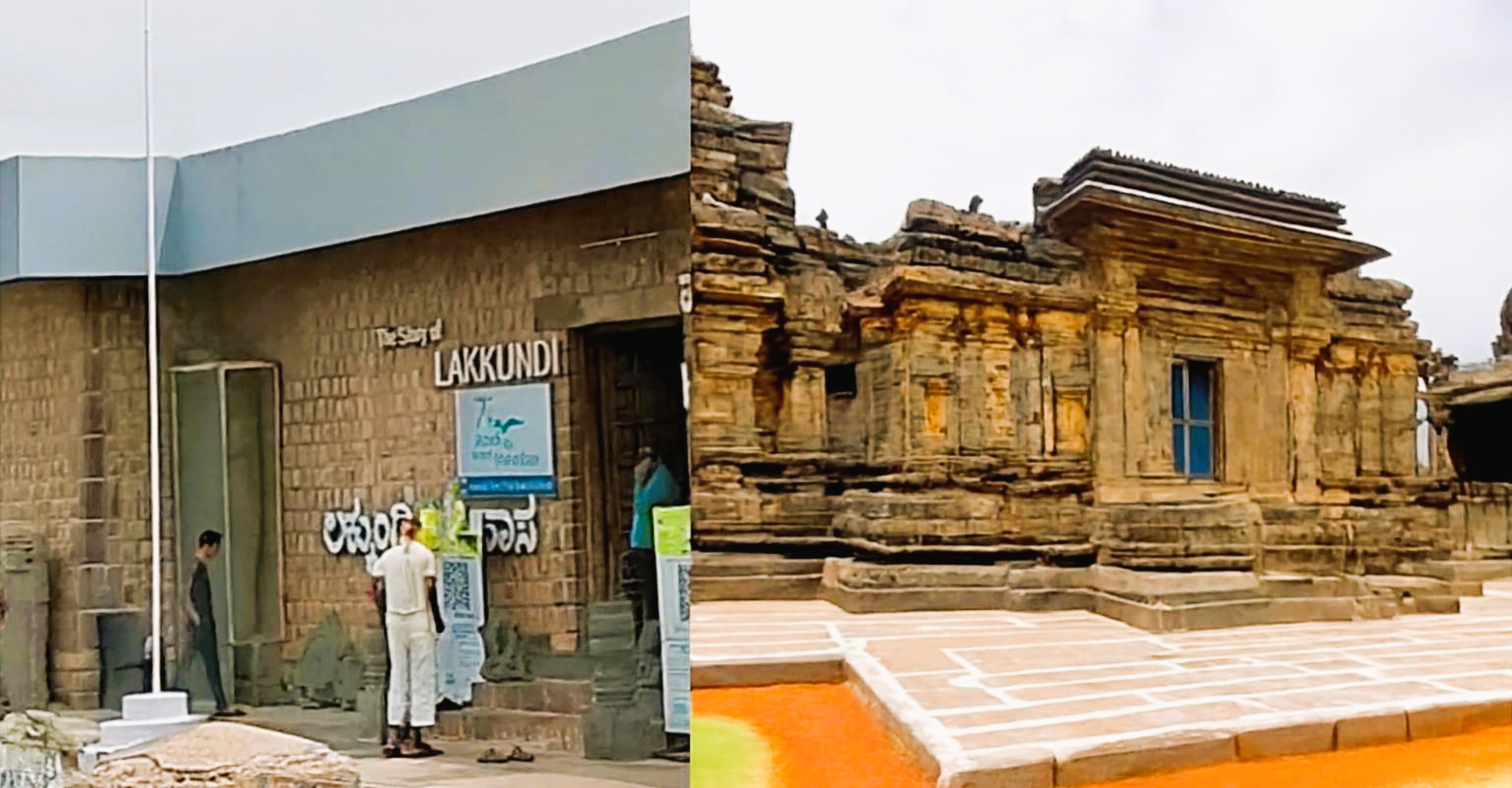

Gadag (Karnataka), January 23: Famous as the work place of the saint Chintamani Attimba and harboring the glorious history of 101 temples and 101 stepwells, the historic Lakkundi village in Gadag district of Karnataka has become a center of attraction for tourists from India and abroad.
Following the recent discovery of a gold treasure, a large number of foreign tourists are also arriving to witness the ongoing archaeological excavation work.
The discovery of approximately 470 grams of gold treasure in Lakkundi on January 10 has generated widespread curiosity not only in the country but also abroad. A group of tourists from France visited the excavation site and gathered detailed information about the work. Foreign tourists have openly praised the honesty of Prajwal Ritti, who handed over the gold recovered during the excavation to the government.
Numerous ancient relics, including bones, marbles, and metal objects, have been recovered from the excavation site, further strengthening the belief that Lakkundi’s true history remains hidden deep within the earth. Locals say that if scientific excavations are conducted further and deeper, the glorious past of ancient Lakkundi may be revealed.
According to villagers, a canal-like road paved with large stones exists from the Kote Veerabhadreshwara Temple to the Siddhar Bavi. It is believed that kings of that era would bathe in this Bavi and then walk along this route to worship at the temples. Currently, a large number of locals and tourists visit the excavation site daily.
It is noteworthy that in 2003, the Archaeological Department conducted excavations near the Allamprabhu Math in Lakkundi, Gadag taluka. Farmer Sharanappa Kamtar’s family provided 3 acres and 33 guntas of land for this purpose. Upon assurances from the then-legislators and local leaders, the land was given for excavation with the consent of Sharanappa Kamtar’s grandfather, Virupakshappa Kamtar.
Excavations that lasted nearly two years uncovered some ancient remains, but the Archaeological Department subsequently abandoned the site. The current situation highlights government negligence. For the past 20 years, the land has been neglected, overgrown with bushes and thorny grass. Some remains recovered during excavation have been left in the open.
The farmer’s family continues to express deep resentment and anguish over the land not being returned and compensation not being received. Villagers say that if the government resumes serious excavation and conservation work at the site, Lakkundi could be developed into a global archaeological tourism hub.