


Varanasi, January 1: A new genetic study conducted by scientists from the Banaras Hindu University (BHU) and the National Forensic Sciences University (NFSU) in Gandhinagar has debunked the long-held Aryan invasion theory.
The study claims that the maternal genetics of Gujarat’s population is entirely indigenous, with roots dating back more than 40,000 years to the Pleistocene.
According to this research, published in the American Journal of Biological Anthropology, there is no evidence of any large-scale invasion or maternal population replacement before approximately 3,500–4,000 years ago. This calls into question colonial-era theories about India’s ancient history, which attributed Indian civilization to external invaders.
Professor Gyaneshwar Choubey, a geneticist at the BHU and senior author of the study, explained that a team of 16 scientists from nine institutions worldwide analyzed 168 complete mitochondrial genomes of Gujarati individuals. They also compared 529 additional sequences obtained from Eurasia and South Asia. The results revealed remarkable continuity and stability in Gujarat’s maternal lineages.
According to the research, 76 percent of Gujarat’s maternal lineages are purely South Asian-specific. Eastern Eurasian contributions were only 0.6 percent, and Western Eurasian contributions were 21 percent. Importantly, only 19 percent of Western Eurasian lineages arrived in the region within the last 5,000 years, while the remaining 81 percent date back even further.
Professor Choubey stated that this study fundamentally undermines the Aryan invasion theory, as there is no indication of any major maternal gene flow or demographic upheaval during the Indo-Aryan period.
According to the study’s lead author, Dr Shailesh Desai, “Instead of invasions that completely altered the population, as in Europe, our data indicate small and gradual gene flow over thousands of years. The maternal genetics of Gujarat show a strong indigenous base.” The research also revealed that a major population expansion occurred in Gujarat about 40–45 thousand years ago, followed by no major maternal genetic disruption during historical phases such as the last Ice Age, the Neolithic period, or the proposed Indo-Aryan migrations.
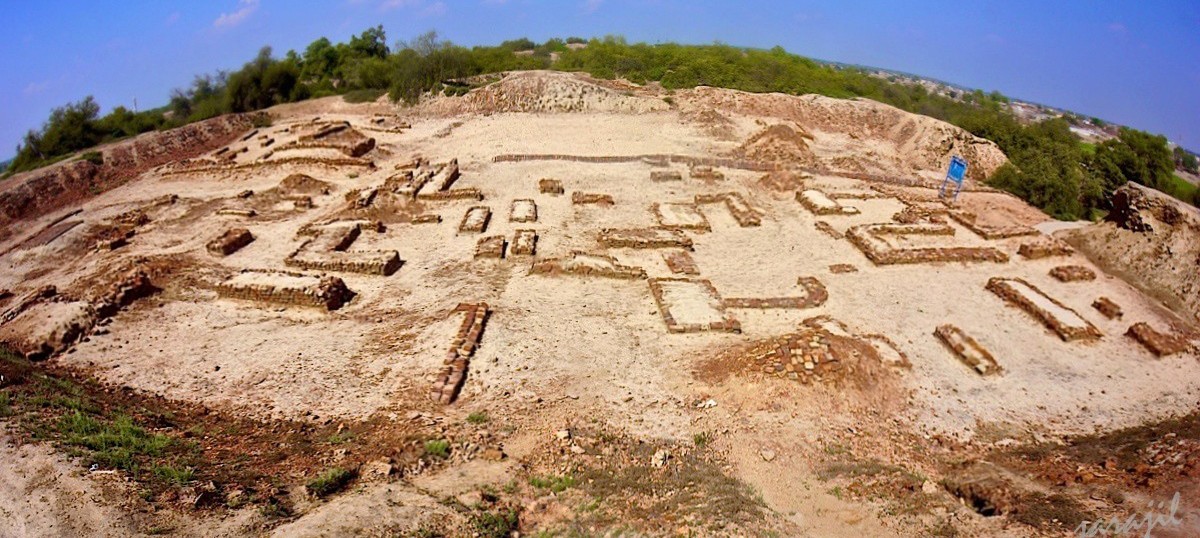
Senior author Professor Bhargav Patel of the NFSU said that the collapse of the Indus Valley Civilization about 4,000 years ago also appears to have minimal impact on maternal genetics, indicating continuity rather than invasion or widespread displacement.
The study also found that gene flow not only came into India from outside, but also from India to Western Eurasia. The predominance of South Asia-specific haplogroups—M (48.21 percent), R (28.56 percent) and U (13.69 percent)—underlines Gujarat’s role as a major gateway for early human migrations into India.
The researchers say the study isn’t just about genetics, but also attempts to examine India’s history without colonial bias.
According to the scientists, the Aryan invasion theory has often been used to explain social divisions, while this new genetic evidence points to India’s ancient indigenous heritage and long-term cultural continuity.