

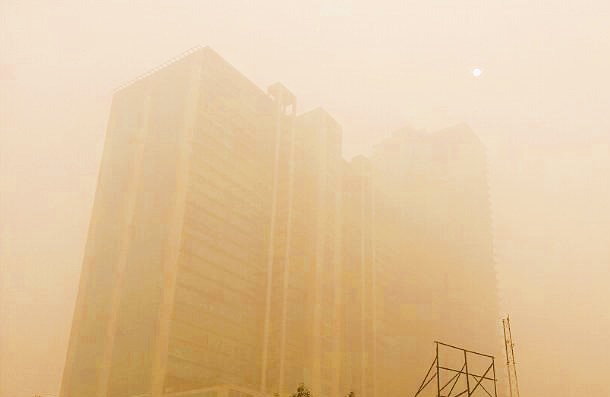

Lucknow, December 23: A high-level state-level meeting was held at the Uttar Pradesh Pollution Control Board (UPPCB) headquarters on Tuesday to review the efforts being made to prevent and control air pollution in the National Capital Region (UP-NCR), including Lucknow and Kanpur.
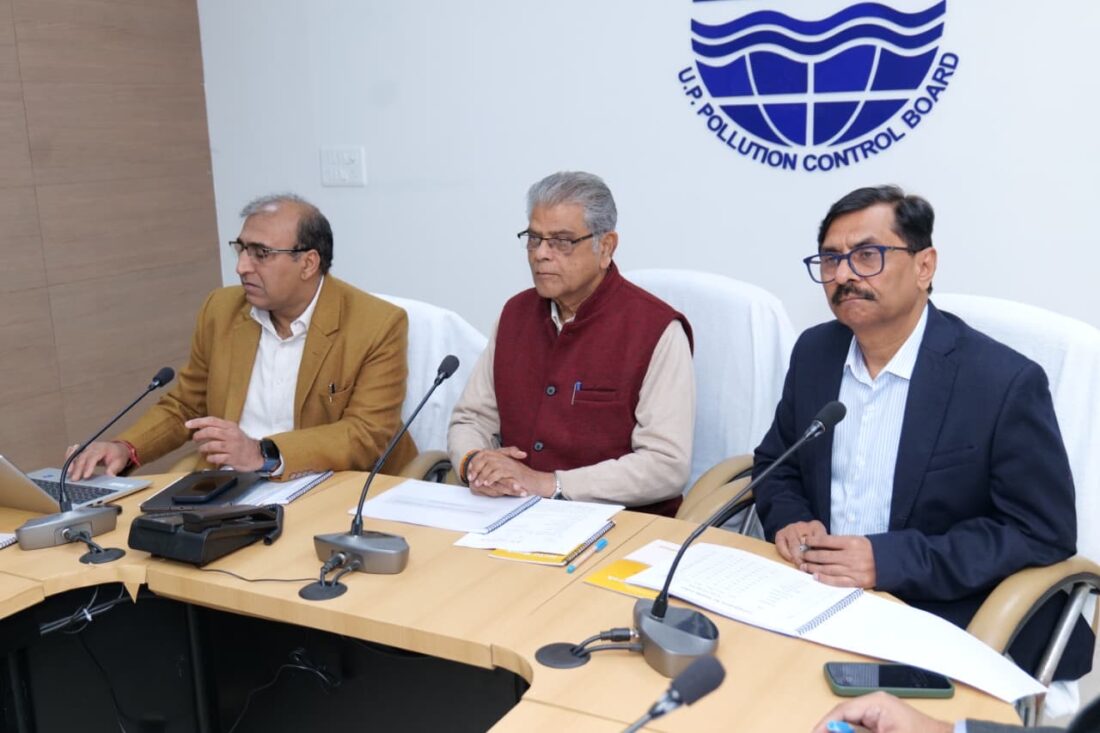
The meeting was chaired by Dr Arun Kumar Saxena, Minister of State (Independent Charge) for Environment, Forest and Climate Change.
During the meeting, Minister Dr Arun Kumar Saxena directed officials from all concerned departments to prepare a clear, timely, and coordinated action plan on all potential sources of air pollution and ensure prompt and effective action, so that clean and better air quality can be provided to the people of the state.
During the meeting, it was informed that 256 teams from various departments are continuously conducting inspections and enforcement actions to control air pollution in the UP-NCR region. To control dust from the roads, regular work is being carried out through 58 mechanical road sweeping machines, 332 water sprinklers and 358 anti-smog guns. Additionally, 3460 kilometers of roads have been identified for redevelopment and improvement to reduce dust pollution.
To control vehicular pollution, intensive inspection campaigns are being conducted and action is being taken against polluting vehicles. To promote public transport, the operation of e-buses, CNG buses and BS-6 standard buses is being encouraged. Special emphasis has also been placed on strengthening the charging infrastructure to increase the use of e-vehicles. The effective implementation of ITMS to improve traffic management was also discussed.
UPPCB Chairman Dr R.P. Singh stated that orders have been issued to ensure the installation of OCEMS (Online Continuous Emission Monitoring System) in all industrial units, ensuring continuous monitoring of industrial emissions and strict compliance with environmental standards.
During the meeting, air quality data for Lucknow and Kanpur, including the UP-NCR region, was reviewed, and detailed discussions were held on controlling major sources of pollution—road dust, vehicle emissions, industrial activities, construction and demolition work, agricultural residues, municipal solid waste, and biomass burning—and ensuring strict enforcement action in case of violations.
Principal Secretary, Environment, Forest, and Climate Change Department, Anil Kumar, Chairman, UPPCB, Dr R.P. Singh, and Member Secretary, Sanjeev Kumar Singh were present.
In addition, officials from the government, headquarters, and district levels from the departments of Agriculture, Home, Transport, Public Works, Housing and Urban Planning, and Urban Development also participated.